
NEWS CENTER

NEWS CENTER

Provide one-stop product services for customers.

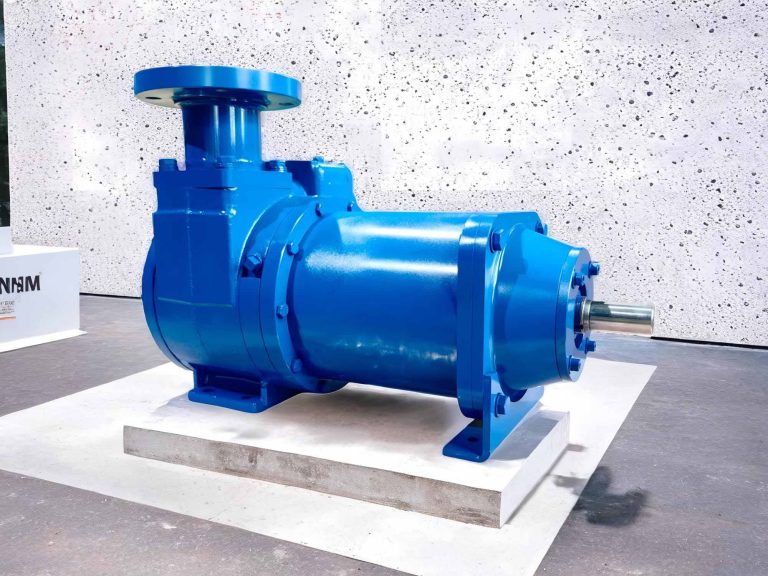
What are the disadvantages of magnetic vane pumps

Although magnetic vane pumps have advantages such as no leakage and corrosion resistance, they have obvious deficiencies in terms of efficiency, medium adaptability, manufacturing cost, power and head, temperature control, installation accuracy, cavitation risk and maintenance cost, as follows: Low efficiency During the magnetic drive process, there is energy loss when the magnetic field transmits torque, resulting in the overall efficiency of the pump being lower than that of ordinary centrifugal pumps. This increases energy consumption and raises long-term operating costs, especially in scenarios where efficient transportation is required. It has high requirements for the cleanliness of the medium Magnetic vane pumps are extremely sensitive to the cleanliness of the conveyed medium. If the medium contains impurities, hard particles or magnetic substances, it is easy to cause wear of the magnetic steel, scratches on the isolation sleeve, and even lead to the jamming of the inner rotor or local demagnetization.
More

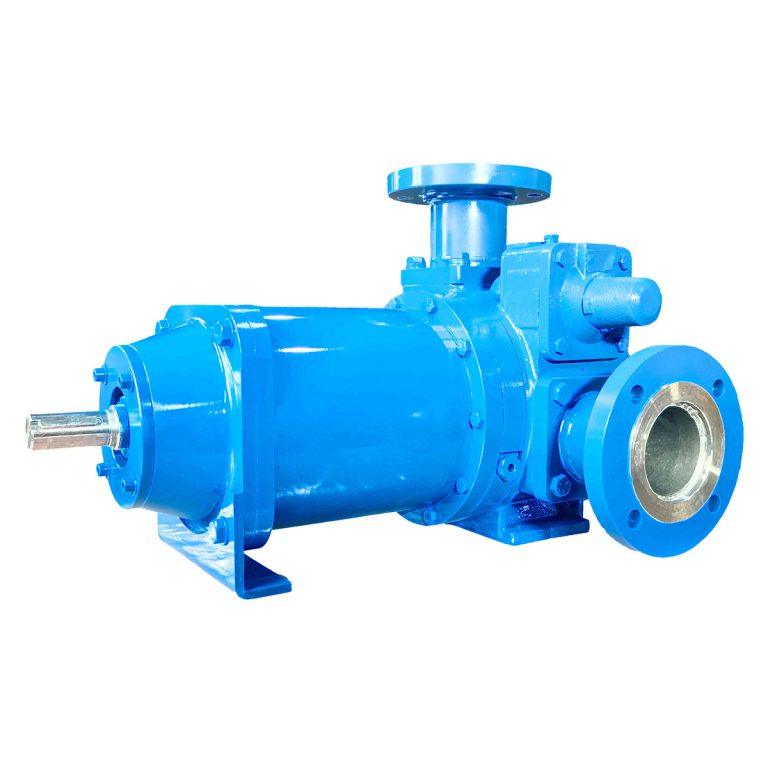
The working principle and structural features of magnetic vane pumps

The magnetic vane pump is an innovative type of pump equipment that combines magnetic coupling transmission technology with the structure of vane pumps. It achieves non-contact power transmission through the synchronous rotation of the inner and outer magnetic rotors and converts dynamic seals into static seals, thus completely solving the leakage problem of traditional vane pumps when transporting flammable, explosive, volatile, toxic and corrosive liquids. The following is a detailed introduction to the magnetic vane pump: I. Working Principle and Structural Features The core components of a magnetic vane pump include an outer magnetic rotor, an inner magnetic rotor, a non-magnetic isolation sleeve, and the vane pump body. When the motor drives the outer magnetic rotor to rotate, the magnetic field can penetrate the air gap and non-magnetic substances, driving the inner magnetic rotor connected to the vane pump rotor to rotate synchronously. During this process, power transmission does not

More

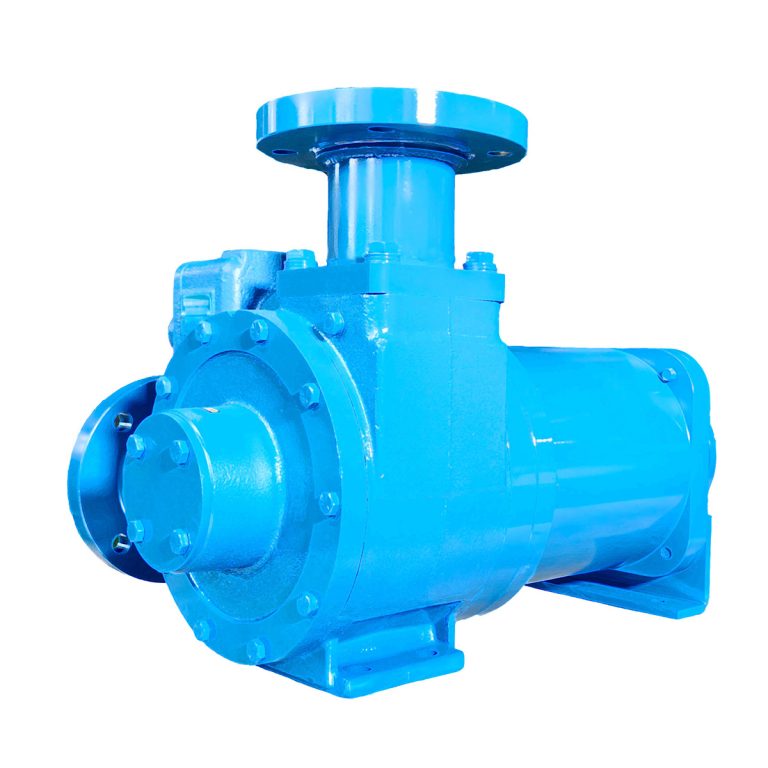
The main components and application fields of vane pumps

The vane pump, also known as the vane pump, scraper pump or plate pump, is a type of positive displacement pump that relies on centrifugal force or spring force to make the vanes tightly adhere to the inner wall of the stator, and achieves liquid transportation through the periodic change of the volume of the sealed chamber. The following is a detailed introduction from five aspects: structure, working principle, performance characteristics, application fields and technical parameters: I. Structural Composition The vane pump is mainly composed of the following components: Pump body: Provides a sealed space to accommodate the rotor, stator and vanes. Rotor: Cylindrical structure, with radial vane grooves on the surface, and vanes are installed in the grooves. The rotor is eccentrically installed in the pump body and is driven to rotate by the drive shaft. Stator: The inner surface is a compound curve (such as involute or arc),

More

The core advantages of the liquid dynamic mixer

A liquid dynamic mixer is a device that relies on the rotation or reciprocating motion of mechanical power components (such as rotors, gears, etc.) to force the fluid to generate intense turbulence and shear force, thereby achieving rapid and uniform mixing of two or more high-viscosity liquid materials within an extremely short tube pass. The core principle is to perform pulsed shearing and kneading on the fluid through the relative motion between the moving and stationary particles (or gears), breaking through the limitation of static mixers that rely on the fluid’s own energy, and significantly improving the mixing efficiency and applicability. I. Core Advantage: The unique value of dynamic mixers Efficient mixing and shortened pipe pass Dynamic mixers achieve thorough mixing by directly applying mechanical power to the fluid within an extremely short tube pass (typically less than 1/10 of that of static mixers). For instance, the planetary gear type

More